Midjourney Wants a Billion Body Scans a Month. The Hard Part Was Never the Scanner.
What Midjourney's full-body "Ultrasonic CT" actually is, what it isn't, and the questions imaging professionals should be asking.
By Jackie, Beyond the Scan · Last updated: July 6, 2026
The short version: Midjourney, best known for generating images from text prompts, wants to scan a billion bodies a month. The current reality is a roughly 20-minute prototype that has scanned about a dozen people, carries no FDA clearance to diagnose anything, and runs without generative AI anywhere in its imaging pipeline. Both of those things are true at once, and the gap between them is the story.
Midjourney Medical is the healthcare division the AI image company Midjourney launched on June 18, 2026. Its first product is a whole-body ultrasound scanner marketed as "Ultrasonic CT," built on Butterfly Network's ultrasound-on-chip technology, targeting a 60-second full-body scan and launching as a wellness offering, with no FDA clearance to diagnose disease.
What did Midjourney actually announce?
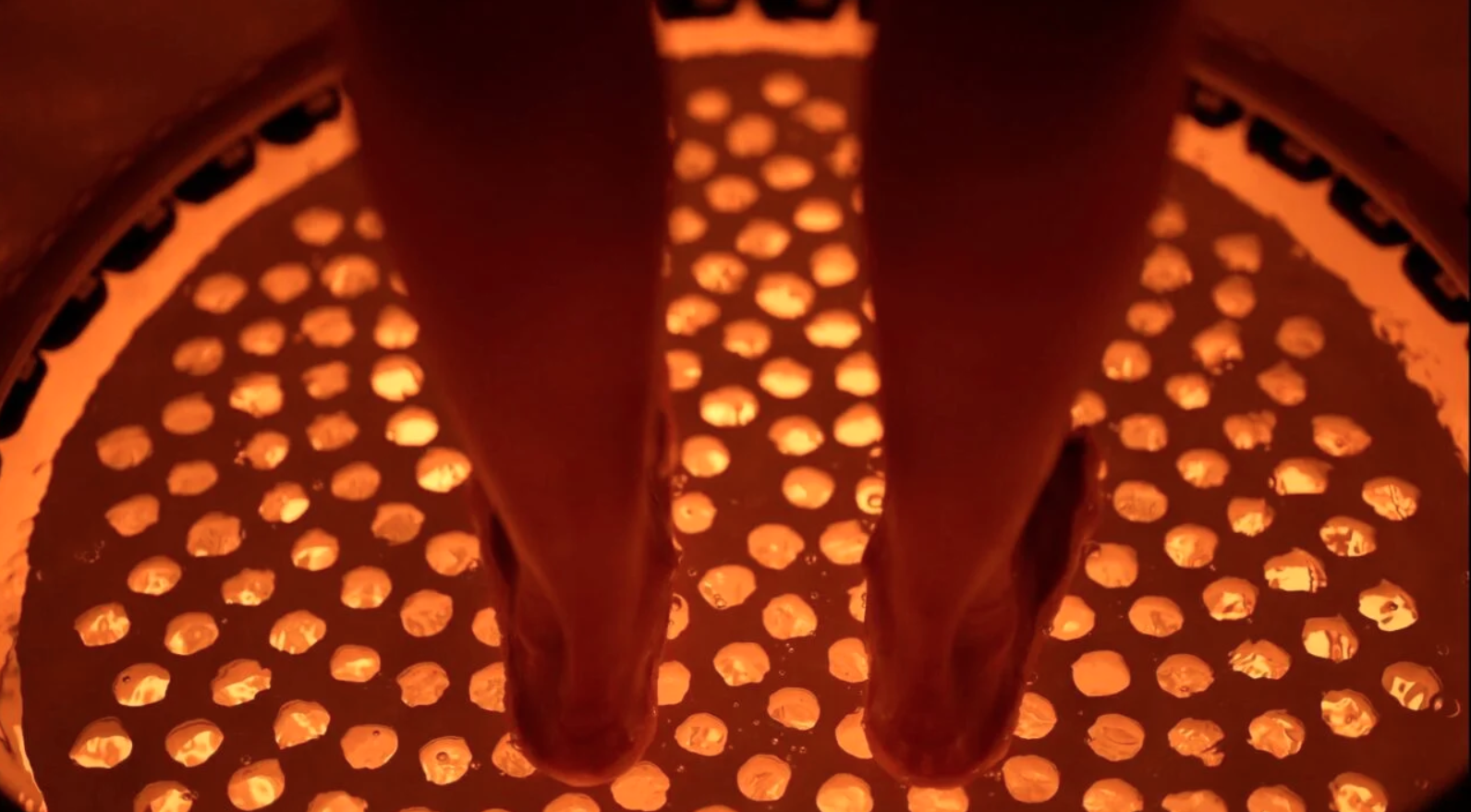
A new division, Midjourney Medical, and a scanner built on Butterfly Network's ultrasound-on-chip technology, licensed under a co-development agreement signed in November 2025 and worth up to $74 million to Butterfly over five years, per Butterfly's SEC disclosure as reported by AuntMinnie. The pitch is a fast, low-cost, whole-body scan: step onto a platform, descend through a ring of submerged transducers, get imaged in about a minute, walk out with a picture of your insides. The consumer-facing version is branded as a "spa," with a first location planned for San Francisco in late 2027. The long-term targets are large, more than 50,000 scanners worldwide and a billion scans a month by 2031, by the company's own account.
The near-term reality is more modest. The prototype takes around 20 minutes, not 60 seconds, and has been used on roughly a dozen people, per TechTimes' launch reporting. It is launching with body-composition maps that make no diagnostic claims, positioned under the FDA's general-wellness policy, with diagnostic clearance described as something the company intends to pursue incrementally, submitting test results to the FDA as its capabilities develop, as R&D World reported.
Is "Ultrasonic CT" the same as a CT or an MRI?
No, and the naming is worth pausing on. CT uses X-rays. MRI uses magnetic fields. The Midjourney device uses ultrasound. "Ultrasonic CT" and "MRI-grade in 60 seconds" are marketing coinages, not descriptions of the physics. That distinction matters to anyone who has spent time in imaging, because the modality determines what you can and cannot see. Ultrasound is operator- and physics-dependent in ways that a one-minute automated pass over a whole body does not make disappear. Borrowing the credibility of CT and MRI for an ultrasound device is a claim that deserves to be read closely, not a settled fact.
Here is how the four modalities actually compare:
CT (computed tomography): X-rays reconstructed into cross-sections; uses ionizing radiation; FDA-cleared diagnostic modality with decades of clinical validation.
MRI: magnetic fields and radio waves; no ionizing radiation; FDA-cleared diagnostic modality with decades of clinical validation.
Conventional ultrasound: high-frequency sound from a handheld probe; no ionizing radiation; FDA-cleared diagnostic modality, though image quality depends on the operator.
Midjourney "Ultrasonic CT": sound waves from a ring of submerged transducers; no ionizing radiation; no FDA clearance to diagnose, launching as a wellness product with body-composition maps.
What happens when you scan healthy people at scale?
This is the part the launch event did not dwell on, and it is the part imaging professionals will recognize immediately. Screening asymptomatic people produces incidental findings: spots, nodules, and shadows that are usually nothing and occasionally something. At a population scale, a meaningful share of those findings trigger follow-up imaging, specialist visits, biopsies, cost, and anxiety, and a portion of that cascade never improves a patient's health. The screening literature has documented this pattern for years.
A billion scans a month does not just stress manufacturing and computation. It manufactures findings. Every one of those findings is a question that lands on a clinician's desk. Which raises the question the announcement skipped.
Who reads a billion scans a month?
Imaging is already short-staffed. The average radiologist search takes 130 days to fill, per AAPPR benchmark data, and CT technologist vacancy reached 19.4% in 2025, an all-time high, in the ASRT 2025 Radiologic Sciences Staffing and Workplace Survey. The people who interpret studies are not produced at the speed a consumer scanning network would generate work. A scanner that creates images is the easy half. The interpretation, the follow-up, the responsibility for what a scan turns up, that is the half that does not scale on a press release.
It is also worth noting what is not in this system: there is no generative AI in the imaging pipeline. The Butterfly technology uses discriminative machine learning for operator guidance, and that is it. For a company whose name is synonymous with generative models, that absence is telling. Imaging interpretation is a different and harder problem than image generation, and the announcement quietly concedes as much.
So is this good or bad for the field?
Neither label fits yet, and pretending otherwise would be its own kind of spin. New imaging access is not inherently a threat, and a decade of evidence has already refuted the idea that better imaging technology shrinks the need for radiologists. The honest read is narrower: a consumer whole-body screening product, marketed as wellness, scaled toward a billion scans a month, and running ahead of diagnostic clearance, is exactly the kind of thing the imaging profession should evaluate on evidence rather than on the size of the ambition. The engineering earns curiosity. The clinical model earns scrutiny. Those are not the same response, and the field does itself no favors by collapsing them into either applause or alarm.
What should imaging professionals watch for?
Whether the FDA pathway moves from general-wellness body-composition maps to actual diagnostic clearance, and on what evidence.
Who is accountable for incidental findings, and whether qualified interpretation sits anywhere in the workflow.
Whether "MRI-grade" claims are validated against the modalities they invoke, or remain marketing language.
How a consumer screening volume of this scale interacts with a workforce that is already stretched.